share this recipe

Homemade Pie Crust (Eggless & Dairy-Free)

prep time: 10 min | chill time: 3 hr | total time: 3 hr 40 min

Learn how to make homemade pie crust from scratch! This easy eggless pie dough is buttery, flaky, and includes a tested dairy-free option.

Homemade Pie Crust (Eggless & Dairy-Free)

A good pie starts with a good crust, and I love having a homemade pie dough recipe that I can use for all kinds of pies. This one is made with just five simple ingredients, doesn’t need eggs, and can easily be made dairy-free with a plant-based butter. You can prepare it in a food processor or stand mixer, then chill it until you’re ready to roll it out and bake.

From pumpkin and pecan pie to apple pie and other holiday favorites, this is a homemade pie crust recipe you’ll want to keep on hand.

Why You’ll Love This Homemade Pie Crust

  • Eggless: Made without eggs or an egg substitute.

  • Simple ingredients: You only need flour, sugar, salt, butter, and iced water.

  • Easy to make: Prepare the dough using a food processor or stand mixer.

  • Dairy-free option: Swap the butter for a suitable plant-based alternative.

  • Perfect for holiday baking: Use it as the base for your favorite sweet pies.

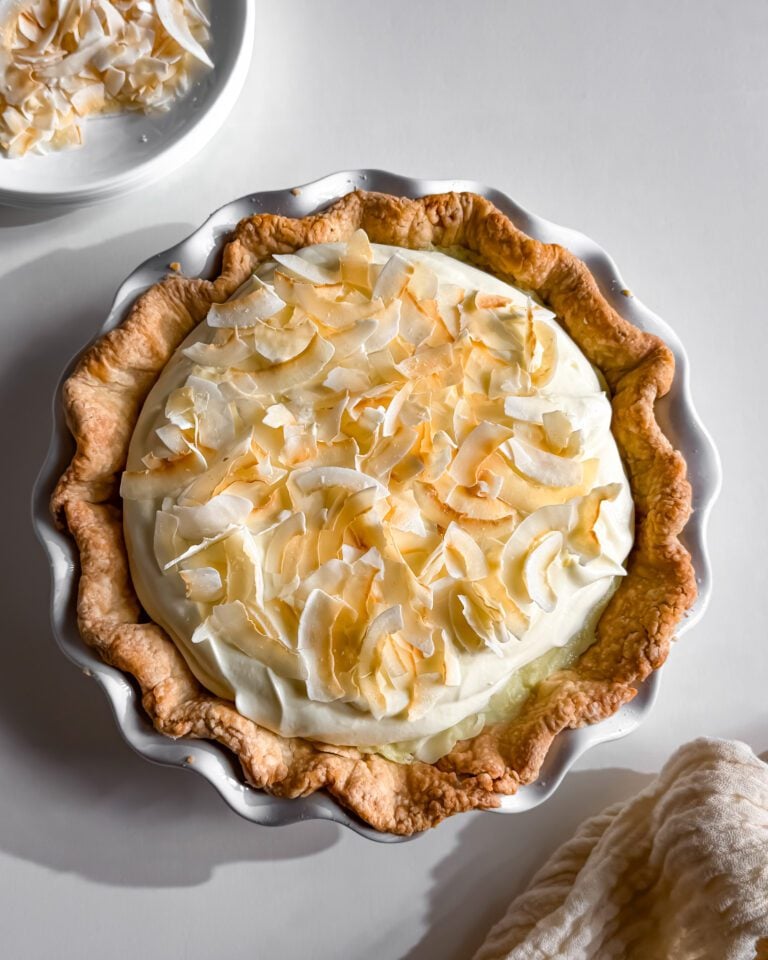
Eggless and Vegan Coconut Cream Pie
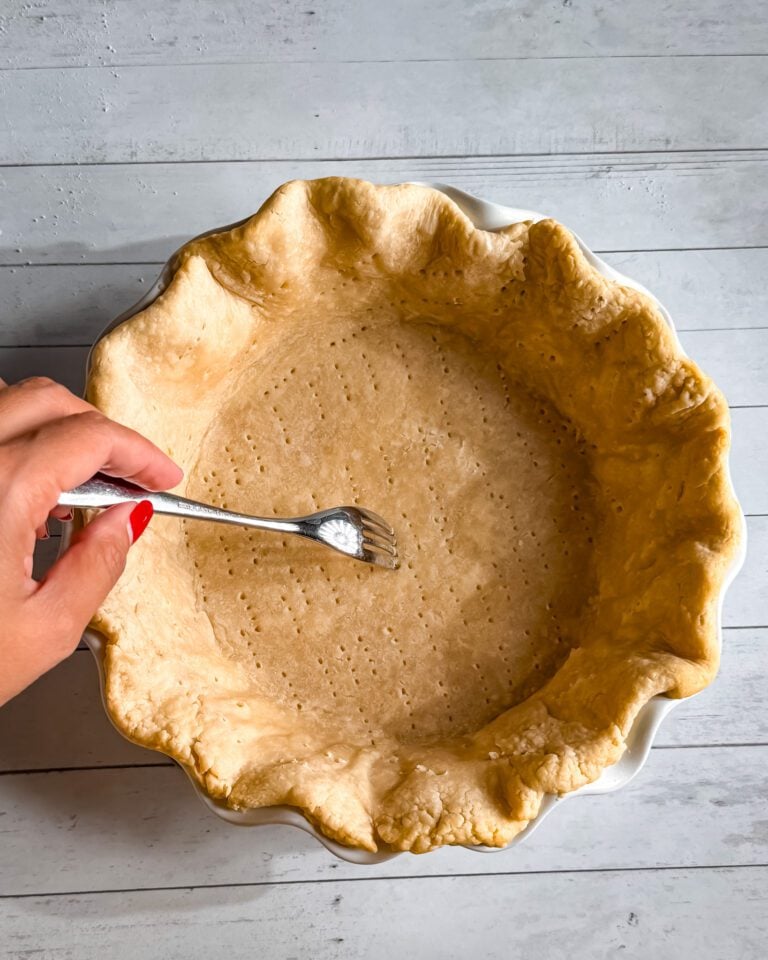
Docking with fork before baking pie crust

Ingredients You’ll Need

  • All-Purpose Flour: Gives the pie crust its structure. I use regular all-purpose flour for this recipe.

  • Castor Sugar: Adds a touch of sweetness and helps the crust brown.

  • Salt: Enhances the flavor and balances the sweetness.

  • Cold Butter: Creates the flaky layers in the crust. For a dairy-free version, use Country Crock Plant Butter Sticks or Earth Balance Buttery Sticks. Keep the butter cold and cut it into cubes before using.

  • Iced Water: Brings the dough together. Add it gradually, you may not need all of it.

How to Make Homemade Pie Crust

You can make this dough in a food processor or stand mixer fitted with the paddle attachment.

  • Combine the dry ingredients. Add the flour, sugar, and salt to your food processor or stand mixer. Pulse or mix briefly until combined.
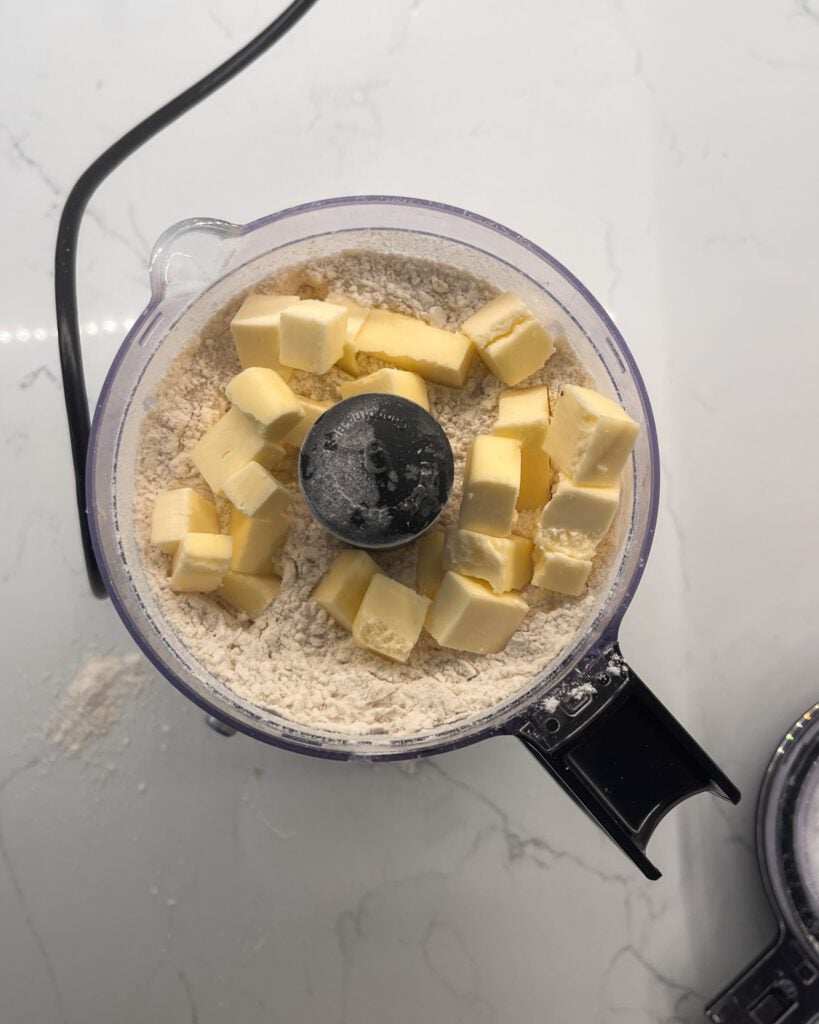
  • Add the cold butter. Add the cubed butter in two additions. Pulse the food processor or mix on low speed until the largest pieces of butter are about the size of large peas. Avoid overmixing.
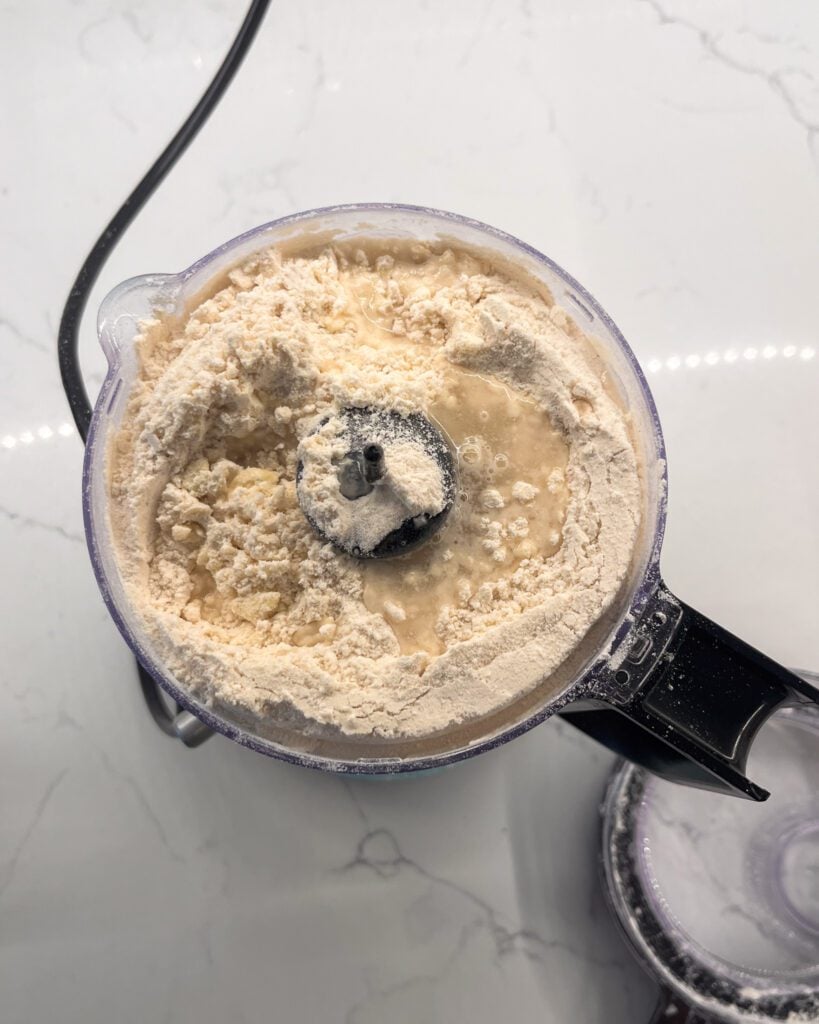
  • Add the iced water. Slowly add about half of the iced water while pulsing or mixing on low. Add the remaining water a tablespoon at a time until the dough just begins to come together. You may not need all the water. To check, squeeze a small handful of dough between your fingers. It should hold together without feeling wet or sticky.
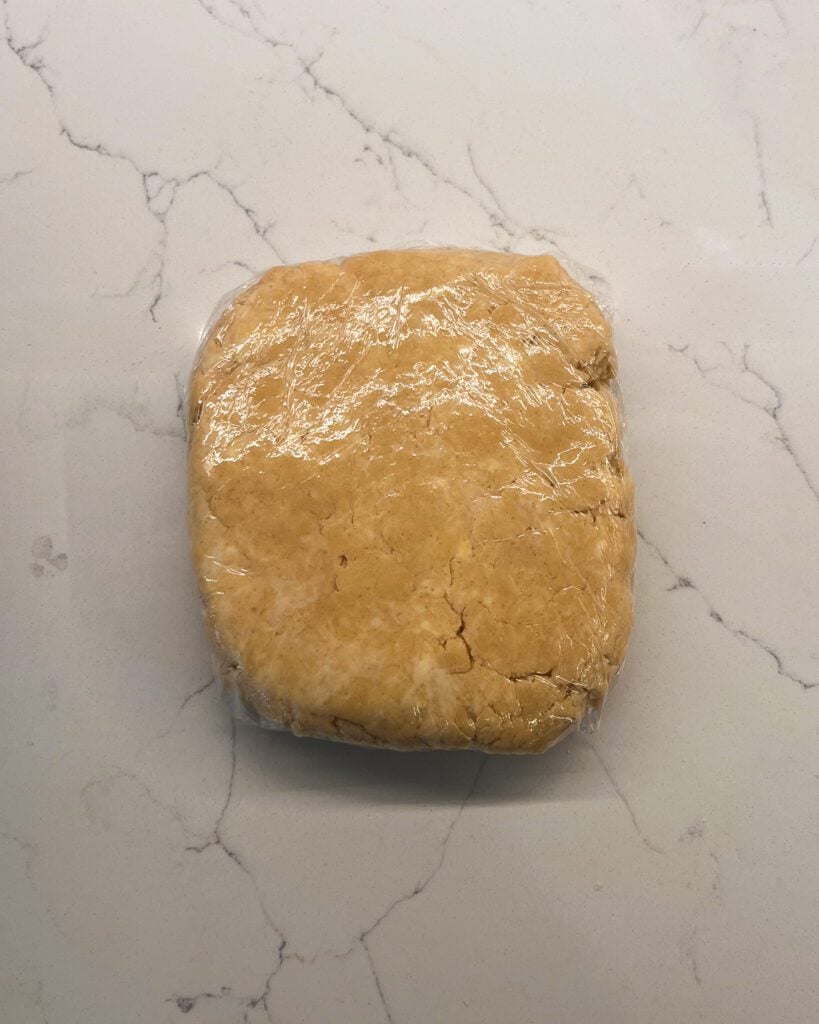
  • Shape and chill. Transfer the dough to a work surface and gently bring it together. Shape it into a flat round disk, wrap it in plastic wrap, and refrigerate for at least 3 hours or up to 2 days.
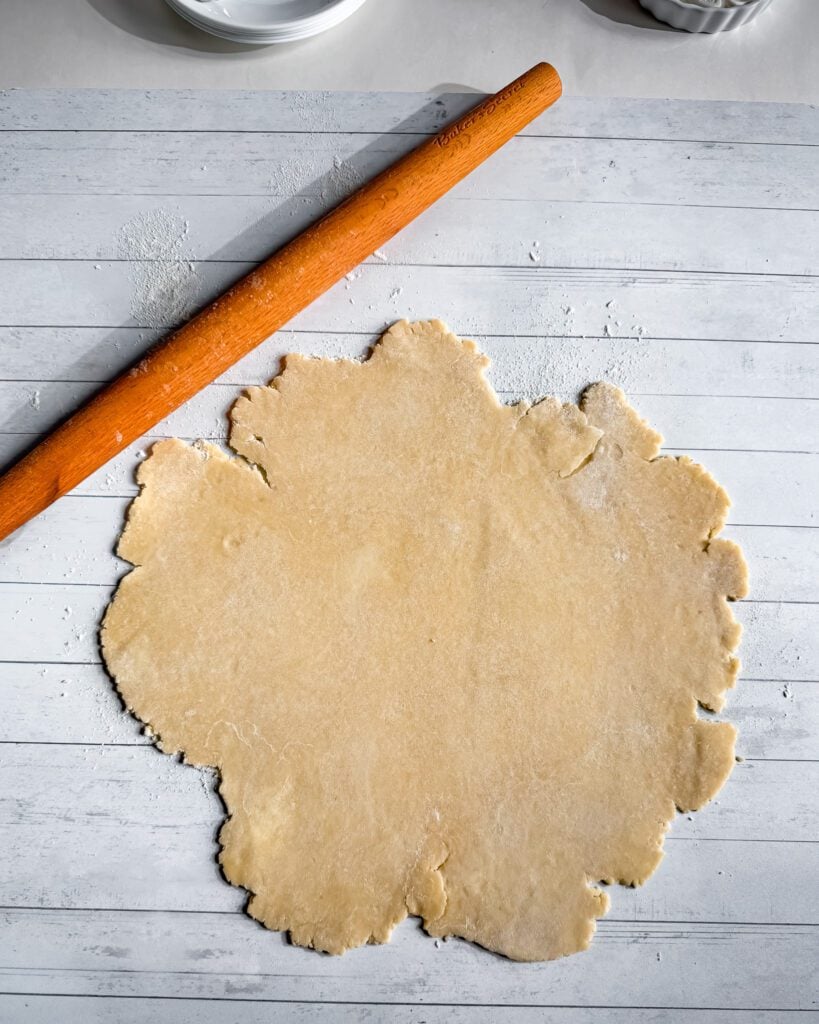
  • Roll out the dough. Lightly flour your work surface and rolling pin. Roll the chilled dough into a 12-inch circle that is about 1/8″ thick, large enough to fit a 9-inch pie dish with some overhang around the edges.
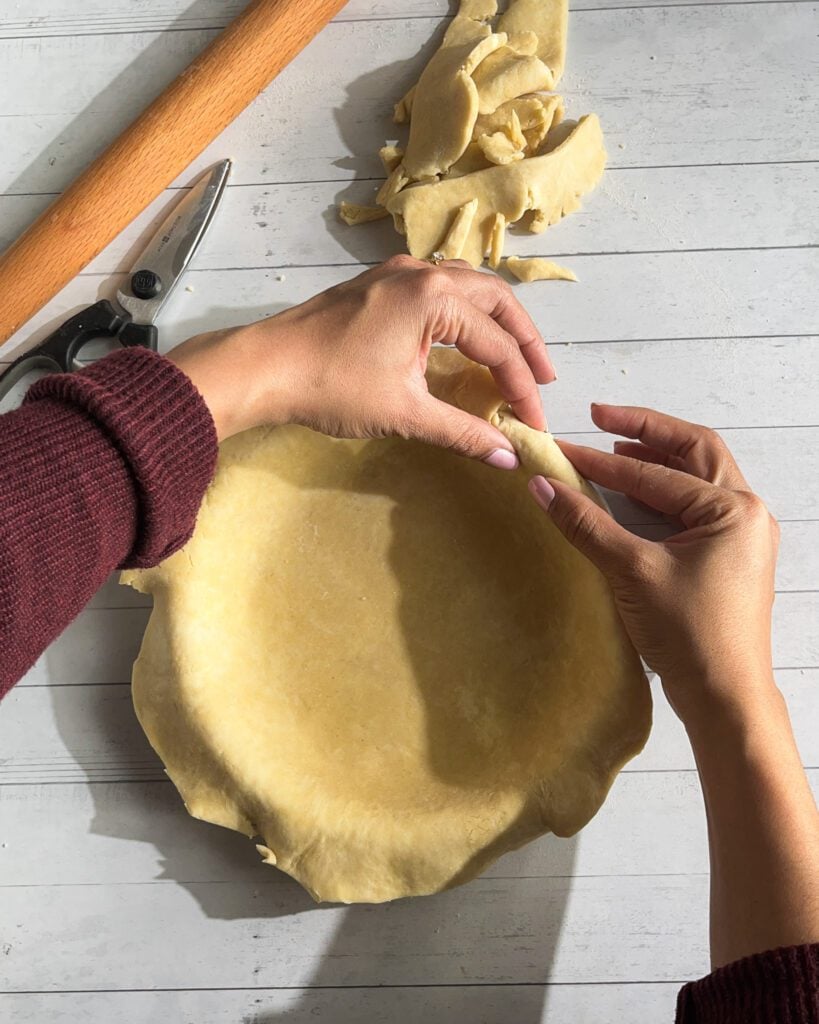
  • Transfer and Shape the Crust: Carefully transfer the rolled-out dough to greased your 9-inch pie dish. Gently press it into the bottom and sides, making sure there are no air pockets. Trim any excess dough, leaving a little overhang, then crimp the edges using your fingers. Refrigerate the shaped pie crust for 1 hour before baking. You can also cover and freeze it at this stage for later use.

pie crust butter-flour mixture
Adding water to homemade-pie-crust
homemade-pie-dough disk
rolling homemade-pie crust on a floured surface

How to Blind Bake Pie Crust

Blind baking means baking the pie crust before adding the filling. It helps prevent a soggy bottom and gives the crust a head start when you’re making pies with fillings that need little or no baking.

  • Preheat the oven: Preheat your oven to 375°F (190°C).

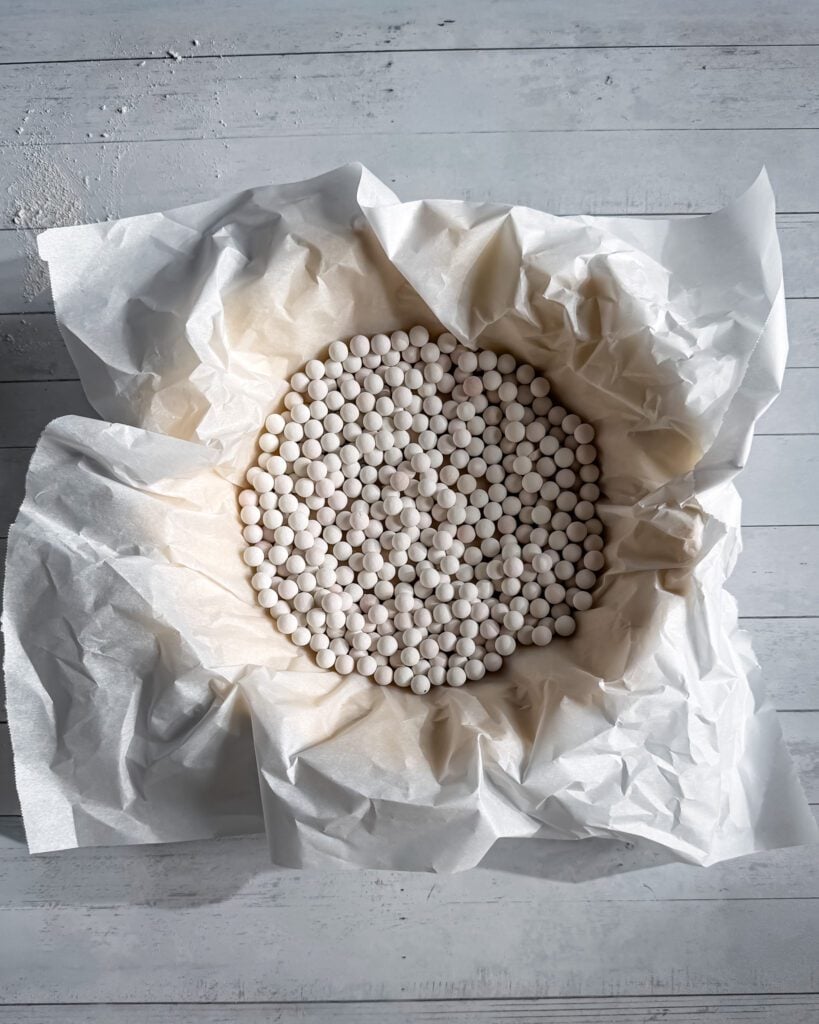
  • Fill with pie weights: Crumple a sheet of parchment paper, then open it back up and place it over the chilled pie crust. This makes it easier to fit into the bottom and sides of the crust. Fill with ceramic or metal pie weights, or dried beans. Push some of the weights gently against the sides to help prevent the crust from shrinking as it bakes.

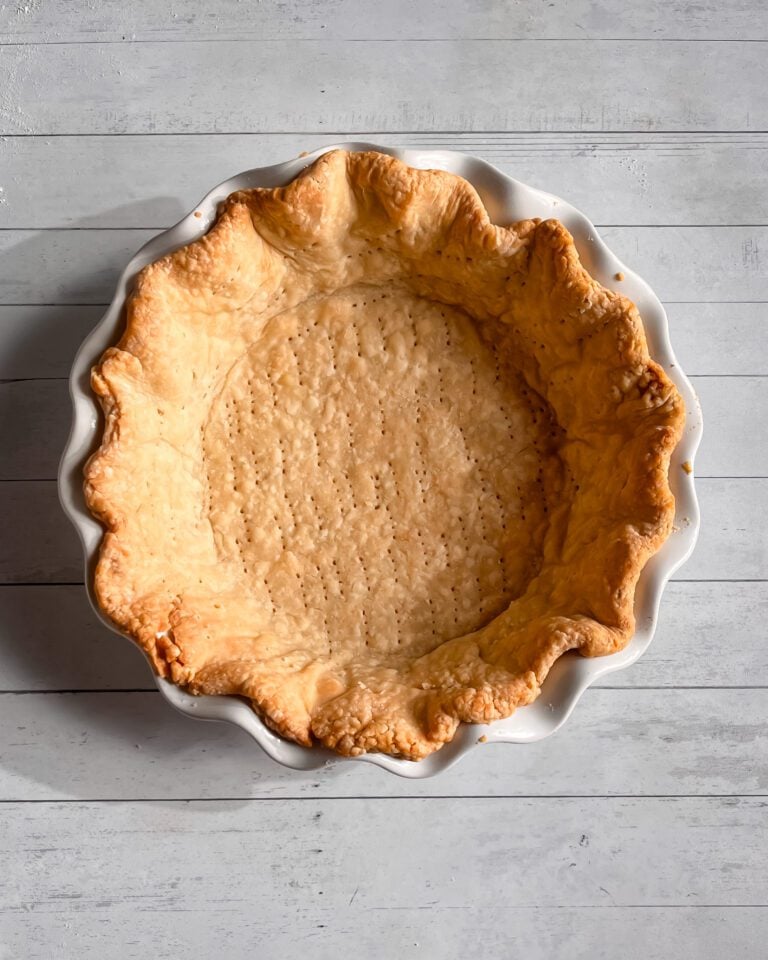
  • Bake with weights: Bake for 18-20 minutes, or until the edges begin to brown and look set. Remove the pie from the oven and carefully lift out the parchment paper along with the weights. Use a fork to prick holes all over the bottom of the crust, then return it to the oven.

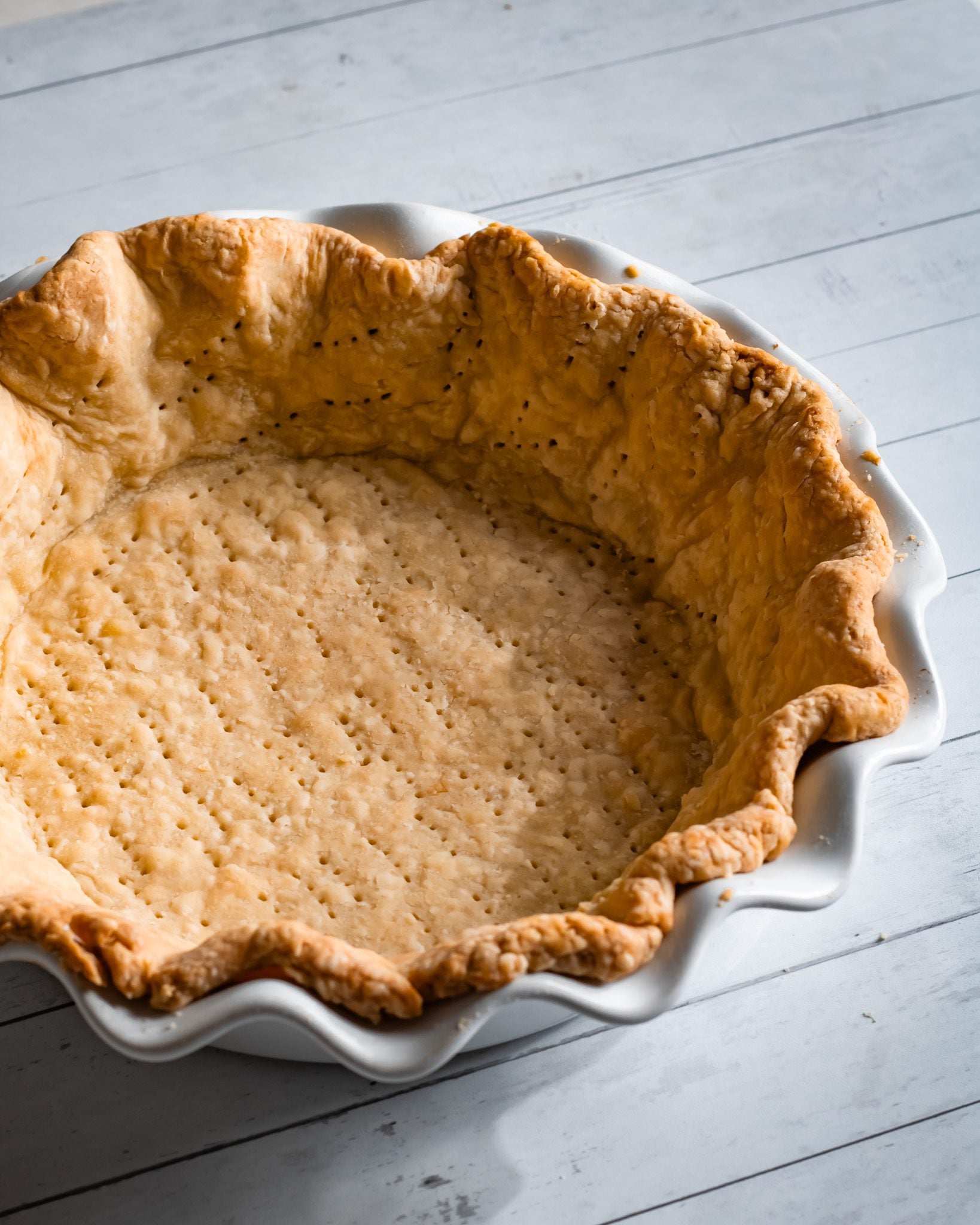
  • For a fully baked crust: Bake for another 10-12 minutes, or until the bottom is golden brown. This is ideal for no-bake pies that need a completely baked and cooled crust.

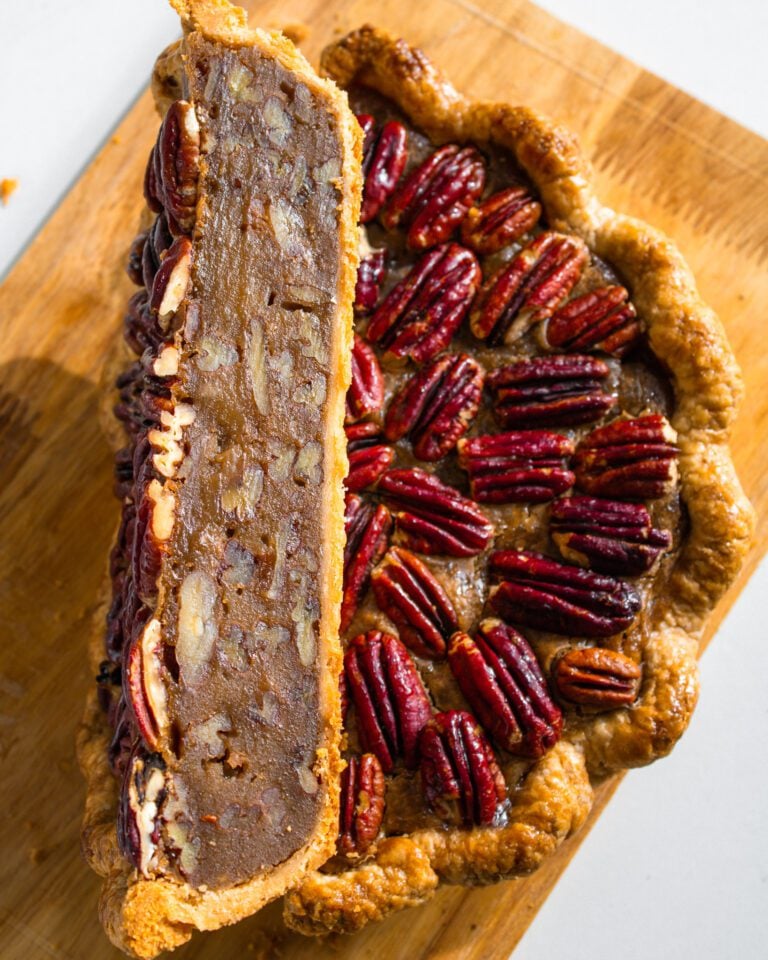
  • For a partially baked crust: Bake for another 5-6 minutes, or until the bottom is just beginning to brown. Use this option for pies such as pecan pie, where the filling will be baked in the crust.

Rolling pie crust dough on the pie dish
Crimping the homemade pie crust dough
Unbaked homemade pie crust fitted into a 9-inch pie dish
blind-baking-pie-crust with pie weights

Frequently Asked Questions

fully baked homemade-pie-crust

Try this Pecan Pie Recipe – Eggless Pecan Pie (Without Corn Syrup)

The Science Behind Eggless Pie Crust

Traditional pie crust doesn’t rely on eggs for its structure. Instead, the flour and water form the dough, while cold butter creates pockets of fat throughout.

As the crust bakes, the butter melts and releases moisture, which creates steam and helps form flaky layers. Keeping the butter cold and avoiding too much water or handling helps prevent a tough crust.

Common Pie Crust Mistakes to Avoid

  • Using warm butter: Soft butter blends too thoroughly into the flour and can make the crust less flaky. Start with cold butter straight from the refrigerator.

  • Adding too much water: Too much water can make the dough sticky and encourage gluten development. Add it gradually and stop as soon as the dough holds together.

  • Overworking the dough: Mixing or kneading too much can make the crust tough. Stop once the dough comes together.

  • Skipping the chilling time: Chilling helps the butter firm up and makes the dough easier to roll. It also helps reduce shrinkage during baking.

Tips for the Best Homemade Pie Crust

  • Keep your butter and water cold throughout the process.

  • Don’t worry if the dough looks a little crumbly before you press it together. It should hold when squeezed.

  • Add the water gradually. You may not need the full amount.

  • Chill the dough for at least 3 hours before rolling.

  • If the dough cracks while rolling, let it sit for a few minutes to soften slightly.

  • If it becomes too soft or sticky, refrigerate it briefly before continuing.

  • Use pie weights when blind baking to help the crust hold its shape.

More Homemade Pie Recipes to Try

Planning your holiday dessert menu?

Here are a few more homemade pie recipes to add to your baking list:

Saloni Mehta Pastry Chef and Food Blogger

Meet Saloni

I’m a former pastry chef with a love for breads, cakes and everything in between! My recipes are easy to follow, egg free and are designed to be shared with others!

popular recipes

Chocolate ganache pouring over coconut cream layer
Decorating a berry cream cake with fresh strawberries and blueberries.
Fresh mango cream cake with soft sponge layers
eggless triple chocolate cake slice with ganache

Get new recipes first!

Check out my Cookbook

Get tips from a pro!

Blind baked Pie crust for pie fillings
No ratings yet

Homemade Pie Crust (Eggless & Dairy-Free)

This homemade pie crust is buttery, flaky, and easy to prepare with simple ingredients. Made without eggs, it also includes a dairy-free option. Use it as the base for your favorite sweet pies.
Author: Saloni Mehta
Rate
Yield: 1 Pie Disc
Prep: 10 minutes
Cook: 30 minutes
Chill Time: 3 hours
Total: 3 hours 40 minutes

Equipment

Ingredients

Homemade Pie Crust

  • 250 g All-Purpose Flour
  • 20 g Granulated Sugar or castor sugar
  • 1 tsp Salt
  • 160 g Butter, cold, cut into cubes; see notes for options
  • 45 ml Iced Water without ice cubes

Instructions

For the Pie Crust Dough

  • Add the flour, sugar, and salt to a food processor or stand mixer fitted with the paddle attachment. Pulse or mix briefly to combine.
  • Add the cold cubed butter in two additions. Pulse or mix on low speed until the largest butter pieces are about the size of large peas.
  • Slowly add about half of the iced water while pulsing or mixing on low. Add the remaining water gradually, one tablespoon at a time, until the dough just begins to hold together. You may not need all the water.
  • Test by squeezing a small handful of dough; it should hold together when pressed.
  • Transfer the dough to a work surface and gently bring it together. Shape into a flat disk, wrap in plastic wrap, and refrigerate for at least 3 hours or up to 2 days.
  • Let the chilled dough sit at room temperature for a few minutes if needed.
  • Lightly flour your work surface and rolling pin. Roll the dough into a 12-inch circle that is about 1/8" thick, large enough to fit a 9-inch pie dish with some overhang around the edges
  • Carefully transfer the rolled-out dough to greased your 9-inch pie dish. Gently press it into the bottom and sides, making sure there are no air pockets. Trim any excess dough, leaving a little overhang, then fold and crimp the edges using your fingers.
  • Refrigerate or Freeze the shaped pie crust for 1 hour before baking. You can also cover and freeze it at this stage for later use.
  • Dairy-Free Pie Crust: Plant-based butter can soften more quickly than dairy butter, so keep the dough well chilled throughout the process. Don't rush the chilling time, especially before rolling and baking, as this helps the crust hold its shape.

For Blind Baking the Pie Crust

  • Preheat the oven to 375°F (190°C).
  • Crumple a sheet of parchment paper, then open it back up and place it over the chilled pie crust. Fill with ceramic or metal pie weights, or dried beans. Push some of the weights gently against the sides to help prevent the crust from shrinking.
  • Bake for 18–20 minutes, or until the edges begin to brown and look set. Remove from the oven and carefully lift out the parchment paper along with the weights.
  • Use a fork to dock holes all over the bottom and sides of the crust, then return it to the oven.
  • For a fully baked crust: Bake for another 10–12 minutes, or until the bottom is golden brown. Let it cool completely before adding a no-bake filling.
  • For a partially baked crust: Bake for another 5-6 minutes, or until the bottom is just beginning to brown. Use this option for pies such as pecan pie, where the filling will be baked in the crust.

Notes

  • Cups vs. Scale: For the most consistent results, use a kitchen scale. Flour can vary significantly depending on how it is measured.
  • Before You Begin: Keep the butter cold and use iced water without adding ice cubes to the dough.
  • Butter: Use cold butter cut into small cubes. For a dairy-free version, use Country Crock Plant Butter Sticks or Earth Balance Buttery Sticks.
  • Iced Water: Add the water gradually. The dough should hold together when squeezed but should not feel wet or sticky.
  • Chilling: Refrigerate the dough for at least 3 hours. This makes it easier to roll and helps the crust hold its shape.

Did you try this recipe? Leave a review!

Leave a Reply

Your email address will not be published. Required fields are marked *

Recipe Rating


Try these recipes next!